
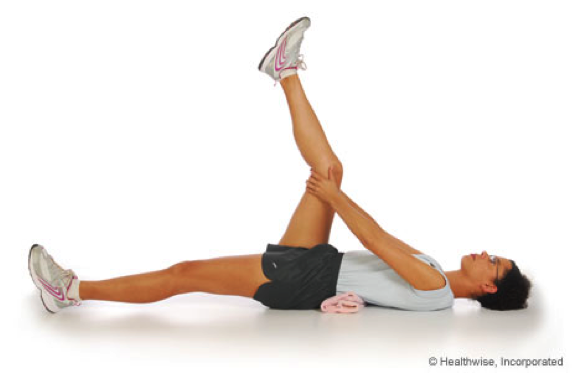
Stretching exercises might be a misnomer because I don’t really think stretching is actually an exercise, but is definitely an important activity that is necessary for successful exercising. See the list of exercises and activities for exercise. I also think that most people have a misconception about stretching. The muscles don’t actually increase in length by stretching. In reality, you’re just getting the muscles and connective tissues to relax and allow the joint to move more freely through it’s range of motion.
Benefits of Stretching
As stated above, stretching doesn’t actually “stretch” muscles. But, that doesn’t mean that stretching exercises are not important. They really allow joints to move through their full range of motion. This allows for proper movement and can lead to improved performance and decreased chance of injuries.
[hmtad name=”In Content” align=”left”]
Types of Stretching
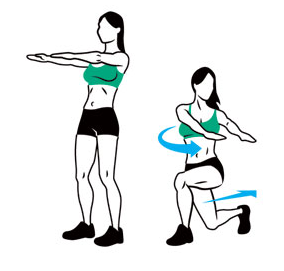
There are two basic types of stretches: Static and Dynamic. Static stretching means that the stretches are being held in place. For example, holding toe touches for any length of time. The other type is called dynamic. Dynamic stretches are ones where the body is moving while the muscle and joint is attempting to increase it’s range of motion. For example: ankle rotations or arm swings. Both types have value. These days, dynamic stretches are commonly done by athletes prior to activity because they do a better job of preparing the body to the activity. Also, studies have shown that static stretching before activity can decrease strength and power in the muscles for abut an hour. Therefore, the practice of dynamic stretching as a warm up should be adopted by all exercises as well. Static stretches should be reserved for after activity.
Stretching Guidelines
Most experts who understand stretching agree that care should be taken to elicit a stretch reflex. This happens when muscles are stretched too far or with too much force. As a safety mechanism, the muscle will actually contract to keep itself from being pulled too hard or torn. But, there are two conflicting schools of thought on how to stretch around these limitations. One school says to use short stretches (3-10 seconds) while contracting the opposing muscles. The second school says to hold easy stretches for a longer time (30-120 seconds) so that the muscle eventually relaxes. I see value in both and actually do both.
Overall, stretching is very beneficial and should be performed by all. Dynamic for warming up, and either type for after exercise. But, never stretch muscles farther than they would naturally move themselves and don’t put a load on the muscle.
I will be putting together a list of stretching exercises as soon as possible in a later article.